Page content competed for attention
Product messaging, feature details, customer proof, and calls to action needed a clear order on the page.
Shipped marketing work
I designed homepages, product pages and emails for Lone Wolf Technologies, and supported WordPress production with reusable sections and responsive layout rules.
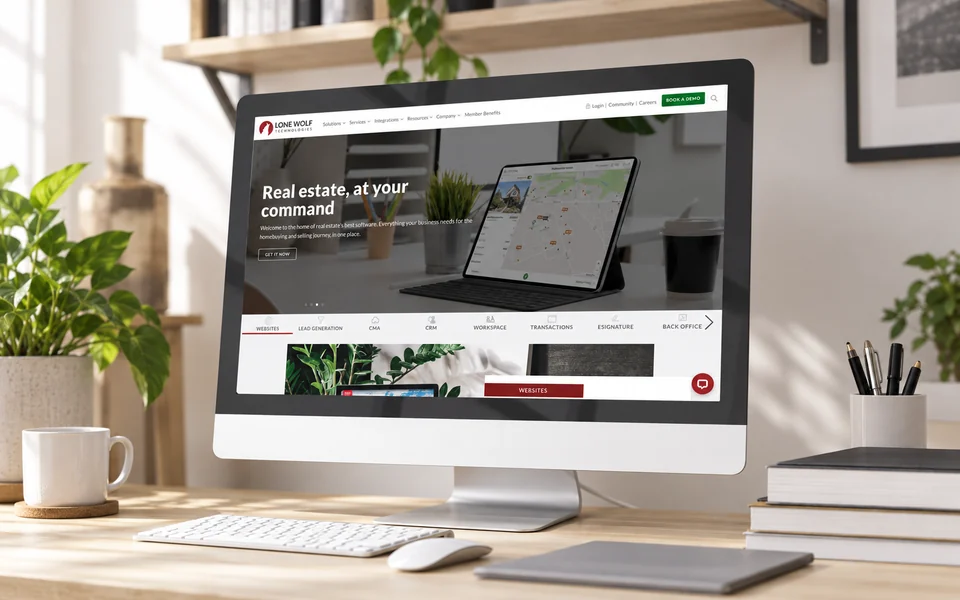
Project / Oct 2020-Jun 2023Marketing web design
Website and campaign design, responsive layout rules and WordPress production support
At Lone Wolf, I designed marketing pages for software used by real-estate agents and brokers. I worked with marketing, SEO, and web stakeholders on homepage and product page layouts, reusable sections, and email design.
I supported production with responsive layout rules and WordPress sections that could accommodate changing content. Internal campaign details and performance data are not included.
3
A homepage, a product page, and an email design.
CMS
Page sections had to work with WordPress editing and production workflows.
Rules
Hero, feature, proof, product, and conversion sections follow repeatable content and layout rules.
EvidenceThe homepage, product page, and email examples document delivered work. No individual effect on reach, conversion, or revenue is claimed.
Product messaging, feature details, customer proof, and calls to action needed a clear order on the page.
Teams needed consistent layouts for recurring content so they could build new pages without redesigning each section.
WordPress components needed to handle different content lengths while keeping the page structure consistent.
The homepage introduced the software offering. Product pages needed space for features, supporting proof, and a clear next action for agents and brokers.
I carried typography, content hierarchy, and calls to action across page designs and email layouts while adapting them to each format.
Headlines, feature copy, images, and calls to action had to work with changing CMS content. My production support addressed section structure and mobile stacking.
The homepage introduces the software range. Product pages give features and supporting proof more room. I reused section layouts while adapting their order to each page’s purpose.
Hero, feature, product, proof and conversion sections have repeatable layout rules. A short campaign offer and a detailed product explanation can use the same system without forcing every section to carry the same amount of text.
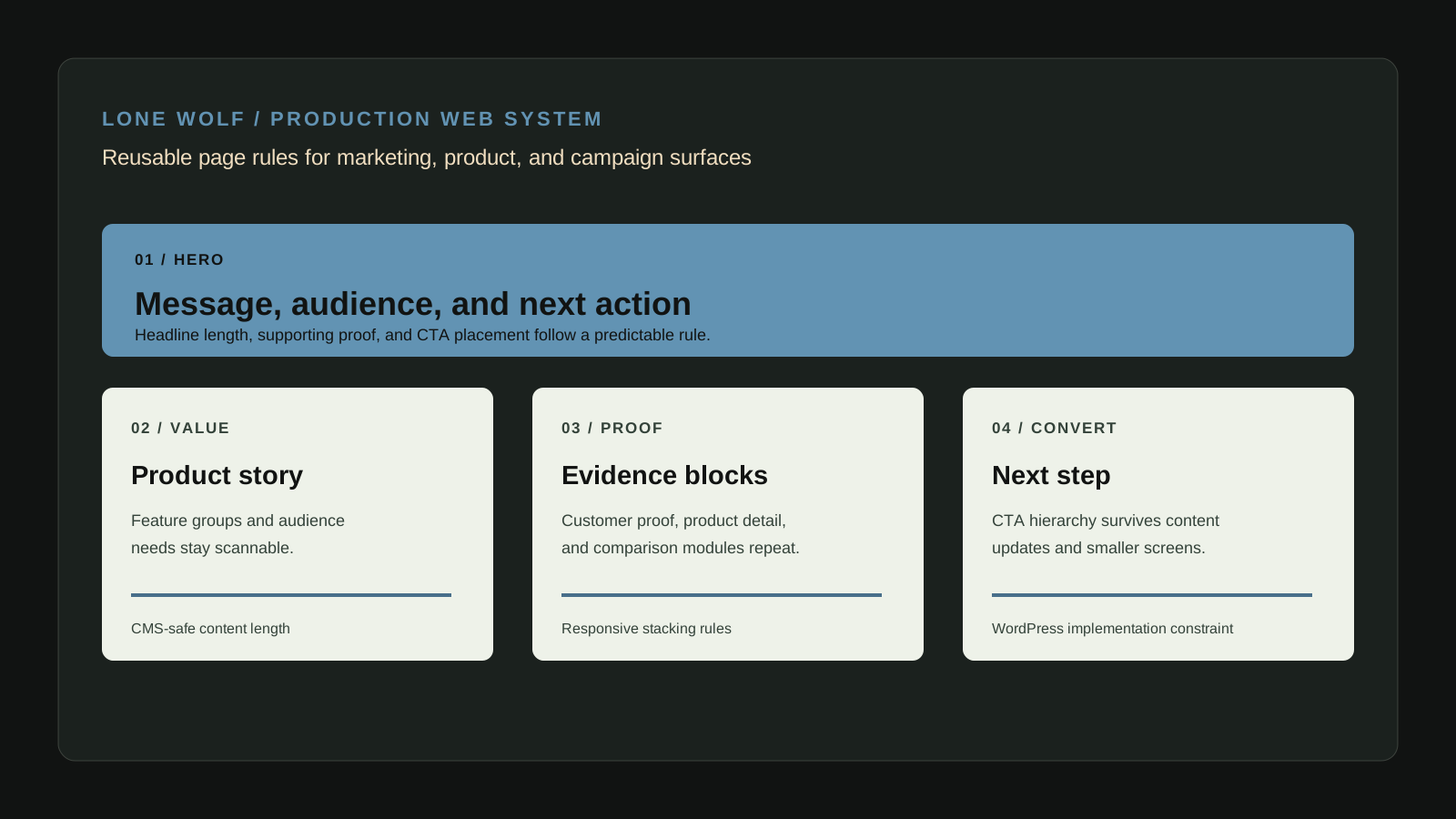
This map shows the recurring sections: hero, features, product cards, proof, and calls to action.
I adapted typography, content grouping and calls to action for email. For the WordPress build, I defined how sections stack on smaller screens and accommodate changing copy.
I planned the content order around each page’s purpose, from introducing the software range to explaining a product and its supporting evidence.
Hero sections, proof bands, feature blocks, product cards, and calls to action shared layout rules that could be reused across pages.
Frontend constraints informed the layout rules so sections could be implemented, maintained, and added to over time.
Shared layout rules let new pages reuse hero, feature, proof, and conversion sections with the same structure.
Product cards group product families and feature details in repeatable layouts for comparison.
Related content was grouped and given stacking rules for smaller screens.
Reusable fields and controlled section options let content change within the same layout rules.

My product page layout separates the offer, features, supporting proof, and calls to action so each has a defined place in the page.
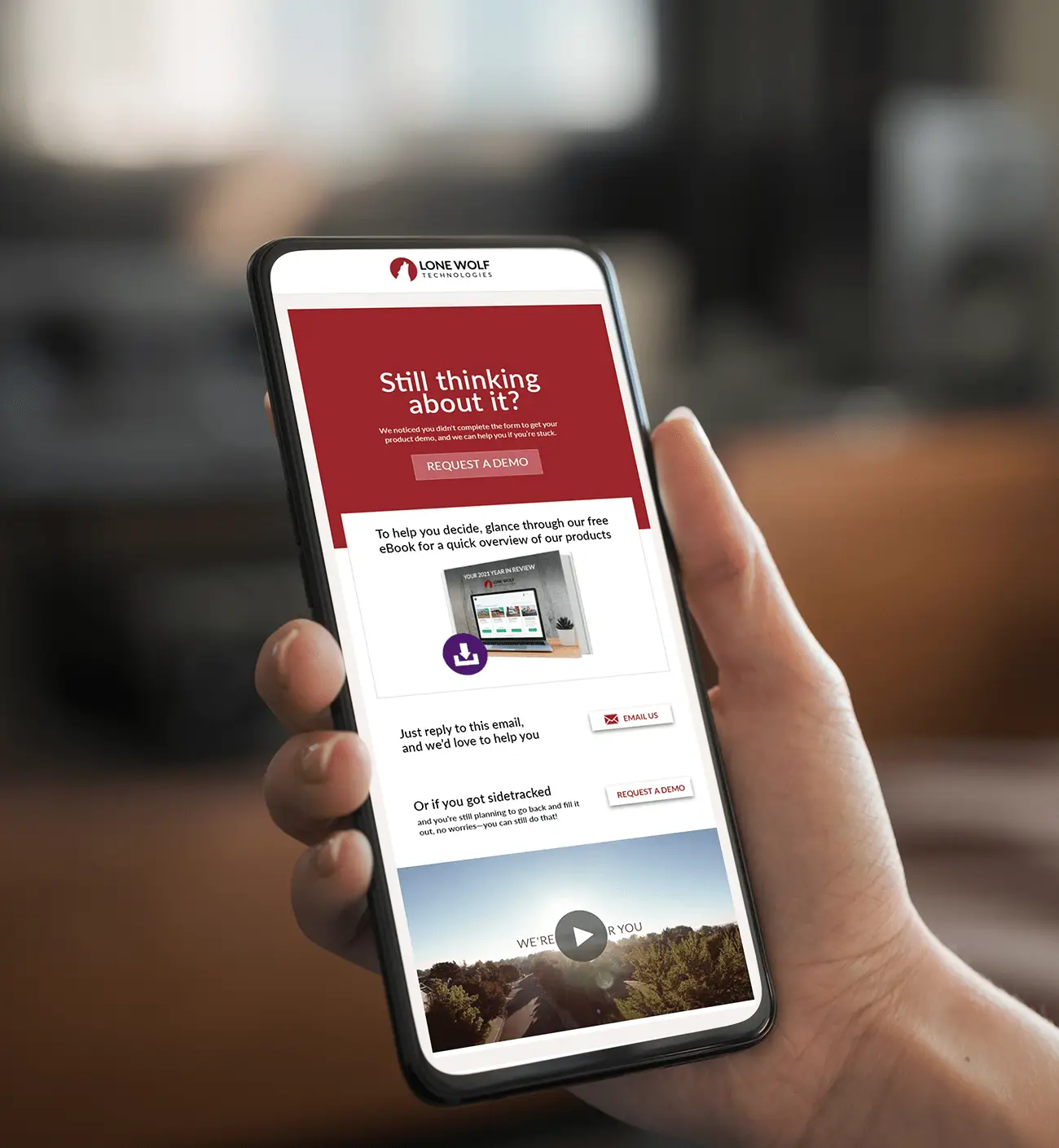
The email design adapts the website typography and content hierarchy for a campaign, with a focused message and call to action.
I designed the homepage and product page layouts shown here, organizing the offer, features, supporting proof, and calls to action.
I designed reusable page sections and email layouts that carried typography and content hierarchy across website and campaign work.
I supported WordPress implementation with responsive layout rules and reusable sections designed for CMS content updates.
Sections were checked with recurring content to see whether they allowed enough variation while keeping a consistent layout.
Layout checks covered CMS content length and behavior at different breakpoints.
The review checked whether the hierarchy explained the purpose of each page without requiring every paragraph to be read.
Looking back
Designing reusable sections gave editors a consistent layout for product explanations, customer quotes and campaign offers. Each section also needed enough flexibility to handle different amounts of copy.
For future iterations, I would check the sections with short and long content and test how visitors move from a product overview to the next action.